Can You Park Your RV at Home in Kansas City?
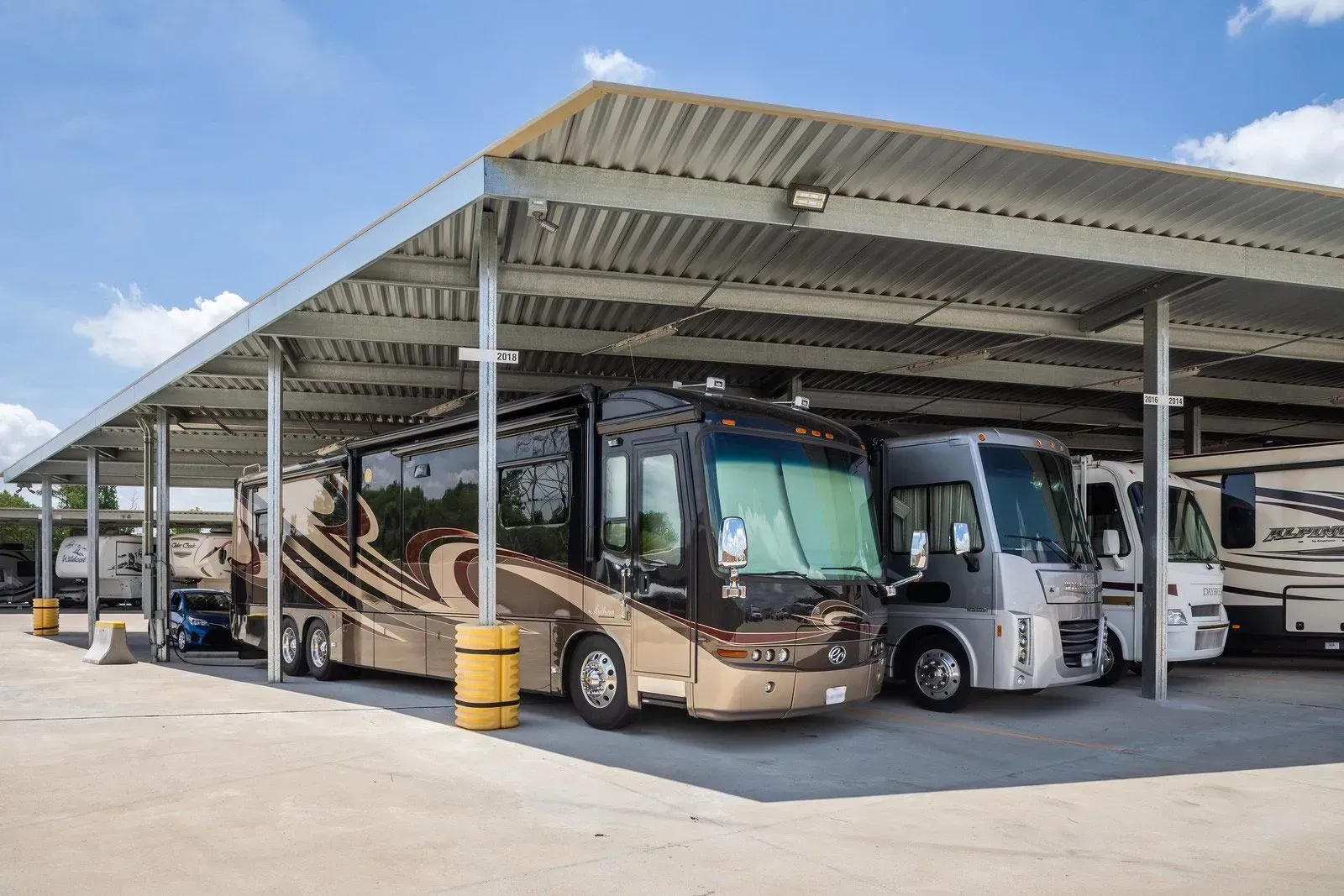
Table of Contents
- Introduction
- What Kansas City's Municipal Code Says About RV Parking
- How Surrounding Cities Handle RV Parking Differently
- What HOA Rules Add to the Picture
- What Happens If You Park Outside the Rules
- When Home Parking May Not Be a Practical Option
- Understanding Your Off-Site Storage Alternatives
- Conclusion
- Frequently Asked Questions
Key Takeaways:
- Kansas City's municipal code (Section 48-35) classifies residential RV storage as a public nuisance unless specific conditions are met.
- Surrounding cities including Overland Park and Lee's Summit each have their own ordinances with different restrictions on where and how RVs may be stored.
- HOA covenants often apply additional restrictions beyond what city ordinances require, and in some cases are more limiting.
- Violations can result in fines, nuisance citations, or vehicle removal at the owner's expense.
- Off-site storage at a dedicated facility is a practical option for owners whose residential circumstances do not permit compliant home storage.
Introduction
Whether you can park your RV at home in Kansas City depends on where in the metro you live, how your property is zoned, and whether your neighborhood has an active homeowners association. For many Kansas City-area residents, the answer is either no, or yes - but only under specific conditions that may not be easy to meet.
This guide explains what the relevant ordinances actually say, how they differ across the metro, and what options are available to owners who cannot store their RV on residential property.
What Kansas City's Municipal Code Says About RV Parking
Kansas City addresses RV parking directly under Section 48-35 of the City Code of Ordinances, which falls under the chapter on nuisances. The ordinance states that parking or storing a recreational vehicle, boat on a trailer, trailer, or camper shell on residentially zoned property is declared to constitute a nuisance.
This is a meaningful legal classification. It means that simply leaving your RV on your residential property - without meeting specific conditions - can be treated as a code violation.
The Three Exceptions Under Section 48-35
The ordinance does provide three circumstances under which RV storage is not considered a nuisance:
- The vehicle is enclosed within a garage or accessory structure
- The vehicle is parked on the paved driveway of the residence, no closer than 11 feet to the near edge of the curb, and no less than 2 feet from the edge of any sidewalk
- The vehicle is parked on a paved parking space that meets the requirements of sections 52-35 and 56-112 of the city code
For most standard residential lots in Kansas City, the driveway setback requirement is the most commonly applicable exception. However, not all driveways are long enough or positioned correctly to meet the 11-foot curb clearance requirement.
Street Parking Is Also Restricted
Section 70-533 of the Kansas City Code of Ordinances addresses parking on residential streets. It prohibits motor homes, house trailers, and similar oversized vehicles from being parked on a residential street for longer than two hours at any one time.
This means that using the street in front of your home as an overflow storage location is not a permitted option under the city code.
How Surrounding Cities Handle RV Parking Differently
The Kansas City metropolitan area spans two states and multiple municipalities, each with its own approach to RV parking regulation. Owners in suburban cities should not assume that Kansas City's rules apply to their address.
Overland Park, Kansas
Overland Park's Municipal Code, Chapter 7.22.080, permits the parking or storage of one recreational vehicle per residence, subject to specific location restrictions. The vehicle may not be stored between the street and the front surface of the residence.
An exception allows the RV to be parked on a paved driveway between the street and the residence on up to two occasions per 30-day period, with each occurrence not exceeding 48 hours in duration.
Any parking or storage outside a fully enclosed building that is not specifically permitted by this section is prohibited under Overland Park's updated code language.
Lee's Summit, Missouri
Lee's Summit has a documented history of revising its RV parking standards. The city's ordinances distinguish between small RVs (20 feet and under) and large RVs (over 20 feet), with different rules applying to each category.
Key provisions include a limit of no more than two RVs parked or stored, with a maximum of one large RV. Storage is generally limited to driveways in front of three-car garages, pads adjacent and connected to driveways, or corner lots with a separate drive. RVs must maintain a 10-foot separation from the nearest adjacent structure.
Why This Variation Matters
Because rules differ by city, the address of the property - not just the general Kansas City area - determines what is and is not permitted. Owners who move within the metro may find that rules they were accustomed to in one city do not apply in another.
Consulting your specific municipality's code of ordinances or contacting your city's code enforcement office is the most reliable way to confirm what applies to your property.
What HOA Rules Add to the Picture
Municipal ordinances establish a baseline, but homeowners associations can impose additional restrictions through their covenants, conditions, and restrictions (CC&Rs). In many cases, HOA rules are more restrictive than city ordinances.
Common HOA Provisions
HOA rules across the Kansas City metro frequently include provisions such as:
- Prohibiting RVs from being parked in driveways for more than a defined period, often 24 to 72 hours
- Requiring that oversized vehicles not be visible from the street
- Restricting storage to rear yards only, and only when screened from neighboring properties
- Prohibiting storage of more than one recreational vehicle on the property at any time
How to Find Out What Your HOA Requires
The governing documents for your HOA - typically the CC&Rs and any associated rules and regulations - are the authoritative source for what is and is not permitted in your community.
These documents are usually provided at the time of purchase. If you no longer have a copy, your HOA management company or board should be able to provide one. Some HOAs also publish their governing documents through community portals or county recorder offices.
When HOA and City Rules Conflict
In cases where HOA rules are more restrictive than city ordinances, the HOA rules generally govern within that community. Compliance with city code alone does not automatically satisfy HOA requirements.
What Happens If You Park Outside the Rules
Parking an RV in a manner that violates either city ordinances or HOA rules can have practical consequences for the vehicle owner.
City Code Violations
Under Kansas City's ordinances, violations related to oversized vehicle parking on residential streets can result in fines ranging from $25 to $500 per occurrence. Each day or occurrence may be treated as a separate violation, depending on the nature of the infraction.
In some circumstances, the city may arrange for the vehicle to be towed at the owner's expense.
HOA Enforcement
HOA enforcement mechanisms vary by community. Common responses to violations include written notices, fines that may escalate with continued non-compliance, and formal hearings before the HOA board.
HOA fines are governed by the association's adopted fine schedule and applicable state law. In Missouri and Kansas, HOAs generally have the authority to place liens on property for unpaid fines under certain conditions, though this varies by community and governing documents.
The Practical Risk
Beyond formal enforcement, vehicles parked in violation of local rules may be subject to neighbor complaints, which can initiate code enforcement reviews. Understanding what is permitted before parking long-term is a reasonable precaution for any RV owner.
When Home Parking May Not Be a Practical Option
Even where home parking is technically permitted under city and HOA rules, it may not be the most practical choice for every owner or every vehicle.
Property and Driveway Limitations
Many residential driveways in the Kansas City metro were not designed to accommodate large RVs. Class A motorhomes and fifth-wheel trailers can exceed 40 feet in length, which may exceed the available driveway space while still meeting the required setback from the curb.
Parking a large RV on a residential property can also affect the usability of the driveway for other vehicles and may create visibility or access issues depending on the property layout.
Exposure to Weather
Kansas City has a humid continental climate with cold winters and frequent severe weather in spring and summer. Leaving an RV exposed to the elements for extended periods - particularly through freeze-thaw cycles, hail events, and prolonged UV exposure - can affect the vehicle's condition over time.
Owners who store their RV at home in uncovered conditions should consider the potential impact of local weather patterns on the vehicle's exterior, roof, seals, and plumbing systems.
Understanding Your Off-Site Storage Alternatives
For owners who cannot store their RV at home, or who prefer not to, dedicated off-site storage facilities offer an alternative that addresses both the regulatory and practical concerns described above.
Types of Storage Available in the Kansas City Area
Off-site RV storage in the Kansas City metro generally falls into three categories:
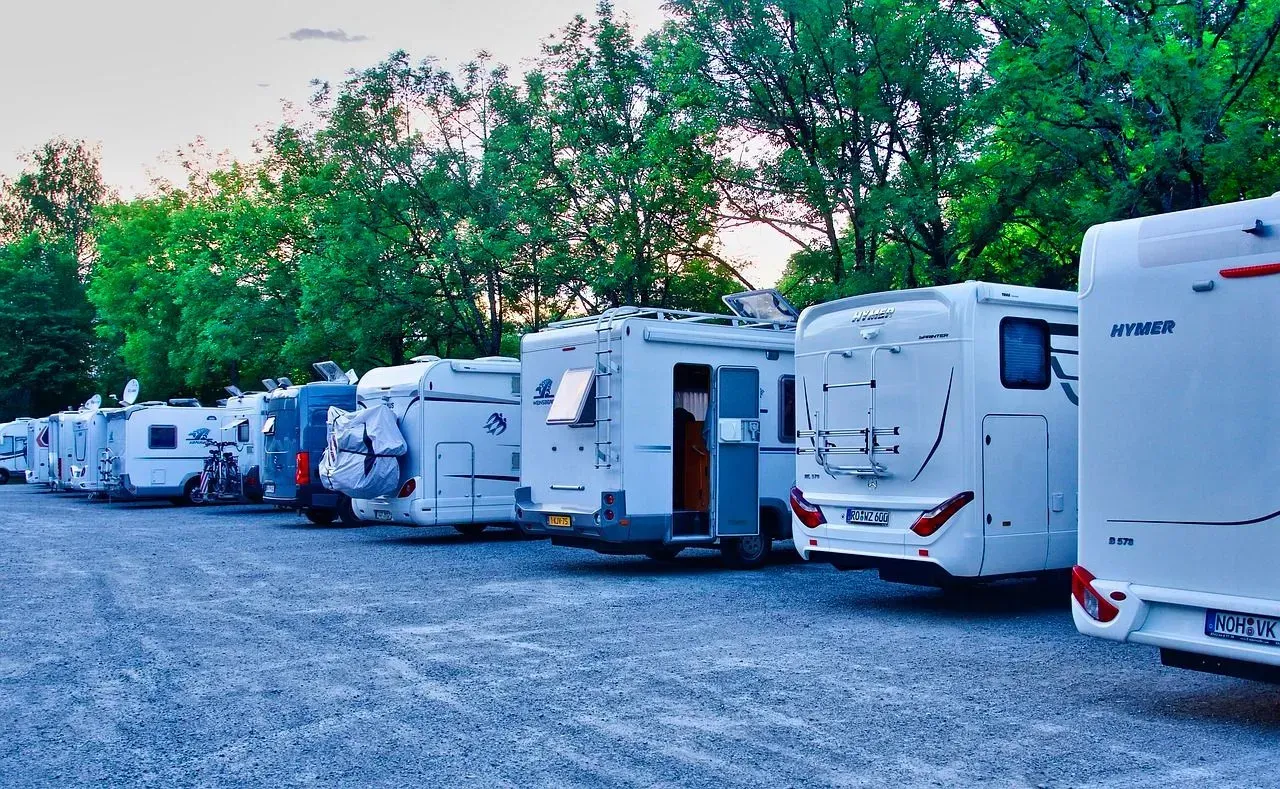
- Outdoor uncovered storage: The vehicle is parked in an open lot. This is typically the most affordable option and is suitable for owners whose vehicles are in good condition for outdoor exposure.
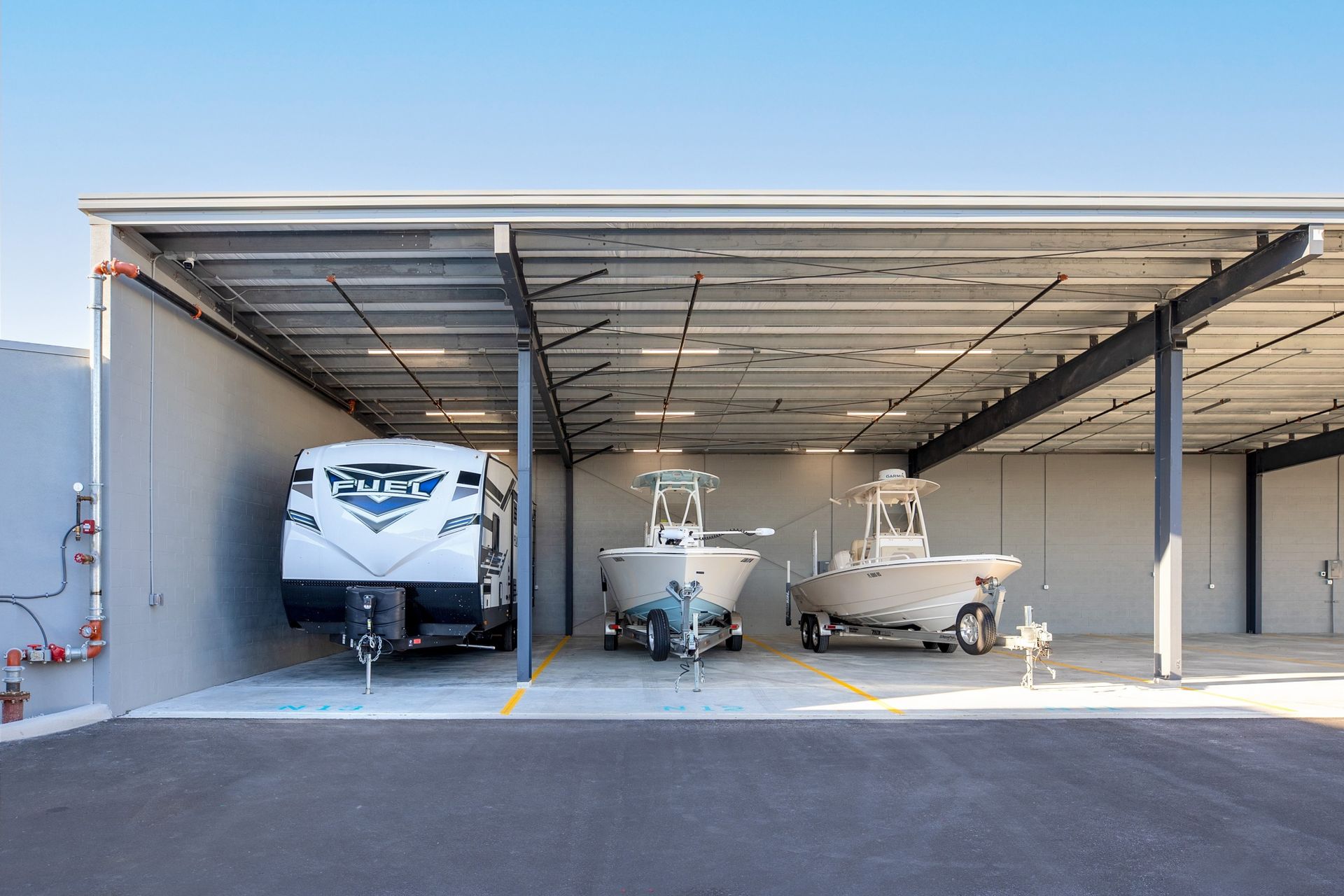
- Covered outdoor storage: An overhead canopy or roof structure provides protection from direct sun, rain, and hail without fully enclosing the vehicle.
- Enclosed indoor storage: The vehicle is stored within a fully enclosed structure, providing the highest level of weather protection.
What to Consider When Evaluating a Facility
Factors worth assessing when comparing storage options include:
- Security infrastructure - gated access, video surveillance, and perimeter fencing
- Space dimensions and lane widths suitable for your specific vehicle
- Access hours and whether they align with your typical use patterns
- Surface type and drainage quality
- Lease flexibility, including whether month-to-month arrangements are available
Conclusion
Parking an RV at home in Kansas City is subject to a specific set of conditions under the city's municipal code, and those conditions vary across the wider metro area. Overland Park, Lee's Summit, and other surrounding cities each have their own ordinances, and HOA rules often add further requirements on top of what city codes permit. Understanding the rules that apply to your specific address - through your city's code of ordinances and your HOA's governing documents - is a practical first step for any RV owner navigating this question.
Where home storage is not permitted, or not practical, off-site storage facilities in the Kansas City area provide a compliant and accessible alternative.
Schedule a Facility Visit
If you are exploring off-site storage options and would like to see what a dedicated RV storage facility looks like in practice, RV Storage Kansas City welcomes visits from owners at any stage of the decision-making process.
There is no obligation to proceed. The goal is simply to give you the information you need to make a well-informed decision about where your RV is stored.
Contact RV Storage Kansas City to arrange a visit or ask questions at a time that suits you.
Frequently Asked Questions
Is it legal to park an RV in my driveway in Kansas City?
Under Kansas City's Section 48-35, driveway parking is permitted if the vehicle is on a paved surface and positioned no closer than 11 feet to the near edge of the curb and at least 2 feet from any sidewalk. If your driveway does not meet these setback requirements, parking there may still constitute a code violation. Confirming your specific driveway dimensions against these standards is advisable before long-term storage.
Do the same rules apply across the entire Kansas City metro?
No. Each municipality in the Kansas City metro has its own ordinances. Overland Park limits driveway RV parking to two occurrences per 30 days, each no longer than 48 hours. Lee's Summit distinguishes between small and large RVs with separate rules for each. Always check the code for your specific city, not the broader metro area.
Can my HOA restrict RV parking even if city rules allow it?
Yes. HOA covenants, conditions, and restrictions (CC&Rs) can impose requirements that are more restrictive than city ordinances. If your HOA prohibits driveway RV parking entirely, that rule applies within your community regardless of what the city code permits. Reviewing your HOA's governing documents is the most reliable way to understand what applies to your property.
What are the consequences of parking an RV in violation of city rules?
Under Kansas City's ordinances, violations related to oversized vehicle street parking can result in fines between $25 and $500 per occurrence. The city may also arrange for the vehicle to be towed at the owner's expense. HOA violations may result in escalating fines and, in some circumstances, liens on the property under Missouri or Kansas law.
What should I look for in an off-site RV storage facility?
Key factors to evaluate include gated and monitored access, space dimensions that accommodate your vehicle's full length, surface type and drainage, access hours that fit your schedule, and whether the facility offers month-to-month lease terms. Asking for a full breakdown of fees before signing any agreement is also a reasonable step.
Related Posts